Tuesday Nighters 24.8.26
Team: John, Katie, Jess, Christine and Victoria
With England having experienced an exceptionally dry summer, we had the opportunity this week to make a trip into Garden Path to check water levels, take some photographs and have a look at the general condition of the cave.
July had been the driest on record for England, with just 10% of the long-term average rainfall. River flows were exceptionally low, groundwater levels were falling and soil moisture deficits were approaching historic highs. So, if ever there was a good time to see what was happening to the water underground, this was it.
We set out as a small group and, as we made our way down towards the dale, my phone pinged with the news that Dolly Parton had reportedly died. A real icon gone — and, rather unexpectedly, we had acquired our theme music for the evening. There are probably worse soundtracks for a caving trip.
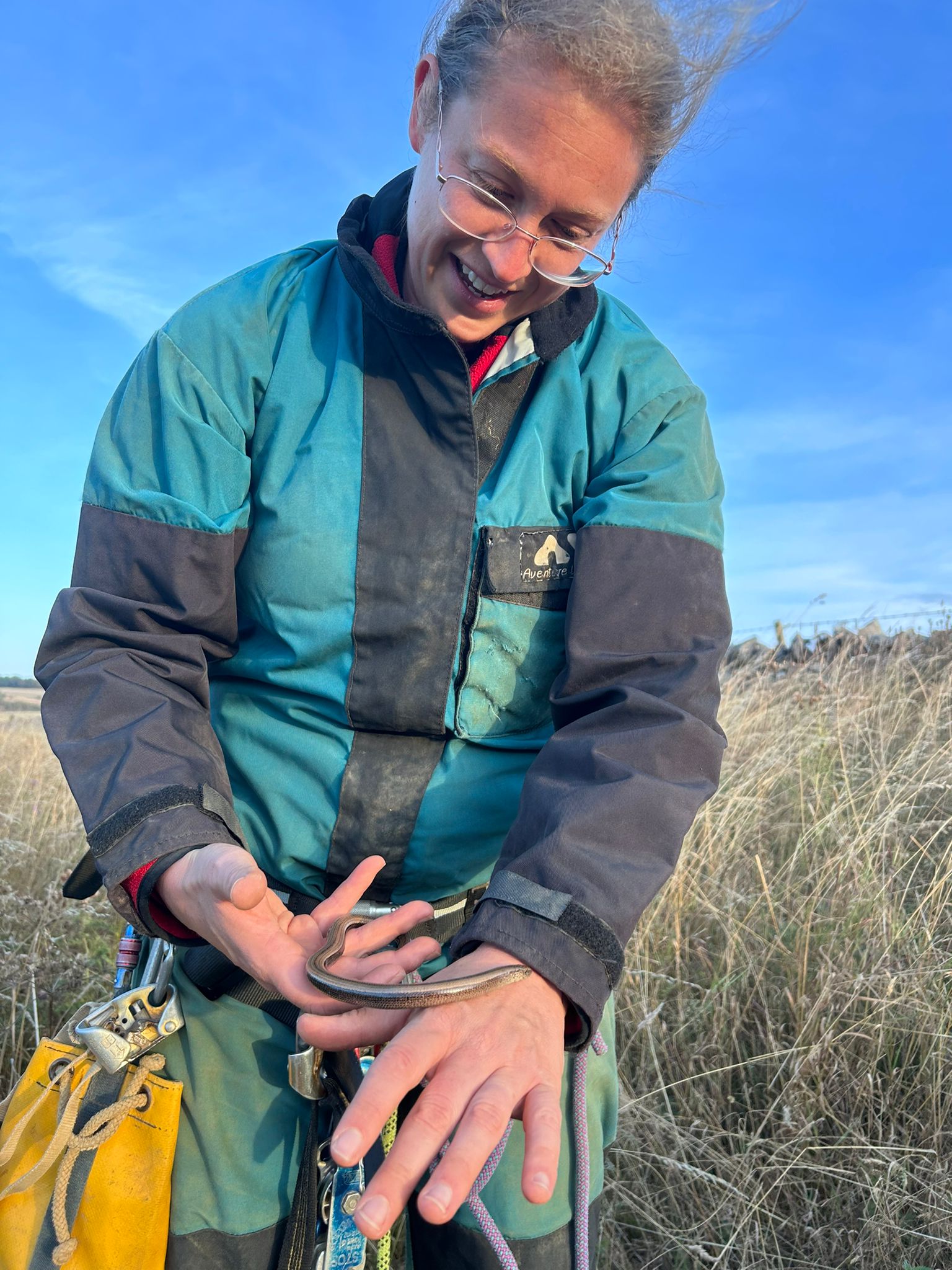
On opening the lid, however, our attention was immediately diverted by Katie finding a slow worm at the entrance. Many of us have only encountered a handful of these lovely creatures in our lifetimes, so it was quite a treat. Our resident veterinarian and all-round stellar caver, Jess, gave our unexpected visitor a quick health check before relocating it to a rather more suitable environment than the top of a cave pitch.
The old ladders have now gone, but the pitch itself is excellent. Katie rigged and, with a few well-placed deviations, we made our way down and through into a glorious chamber.
The photographs I have really don't do it justice.
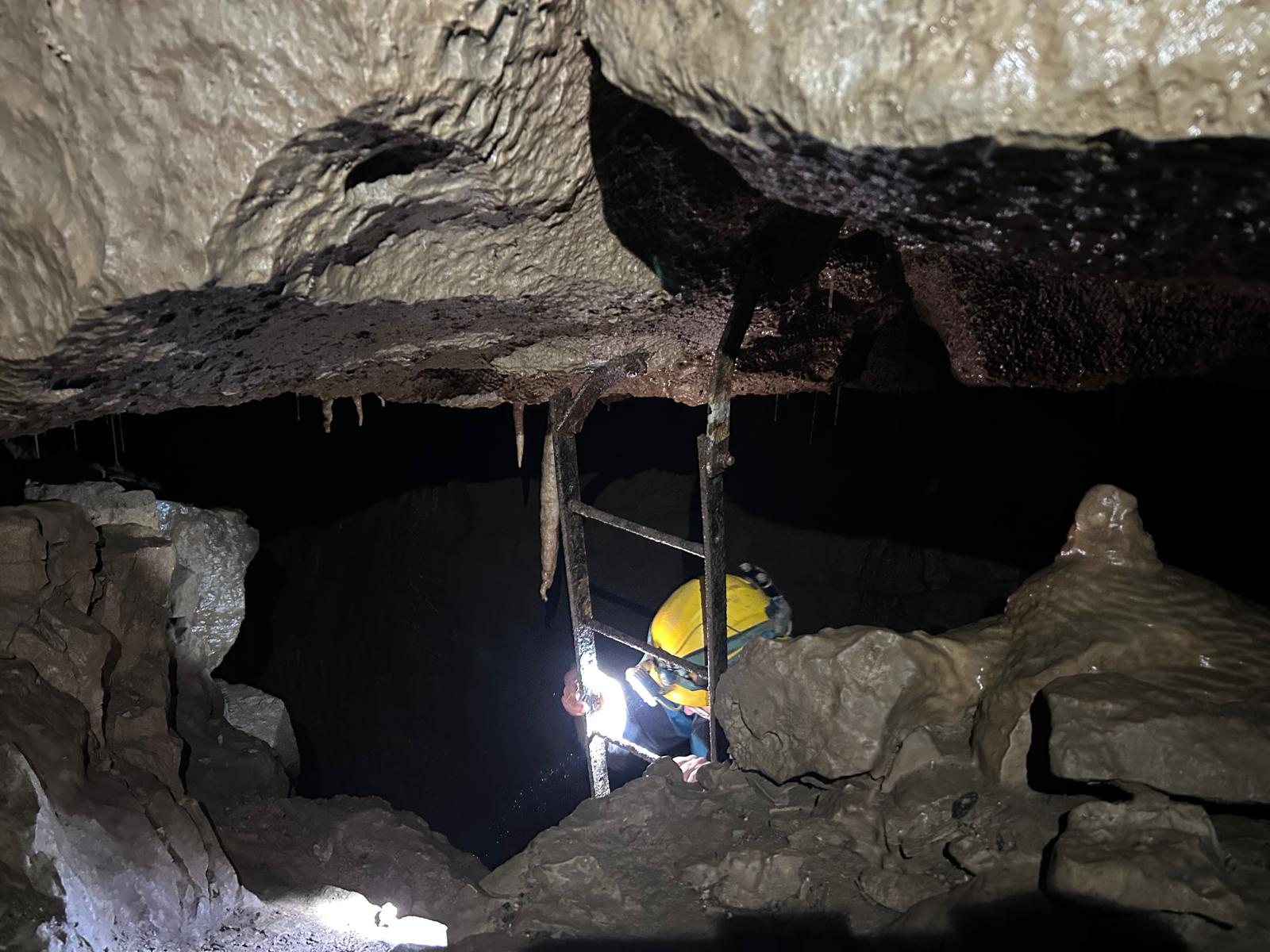
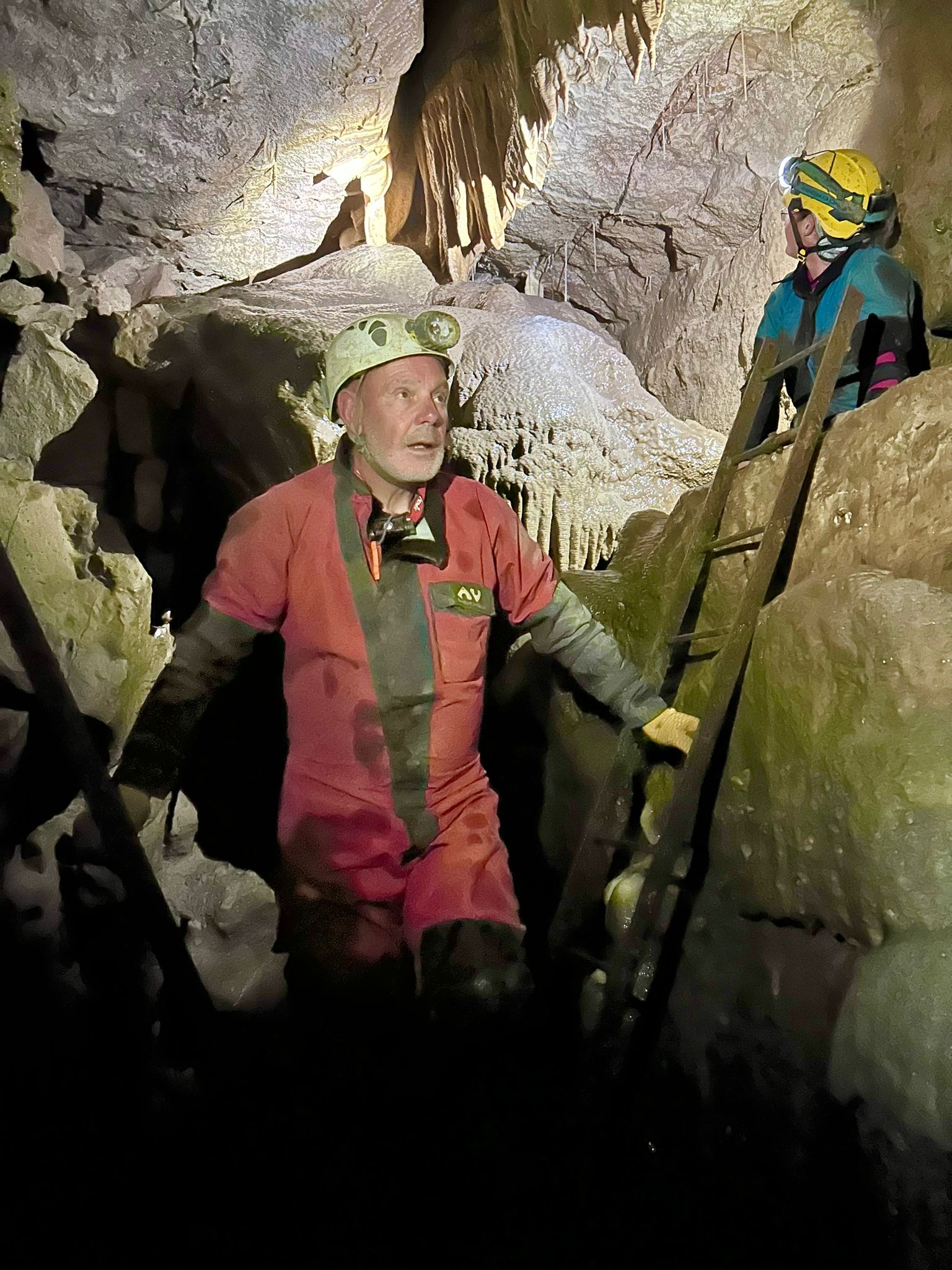
We took our time here, looking closely at the speleothems and the composition and structure of the surrounding rock. One of the pleasures of a trip like this, when you're not trying to race towards a particular destination, is actually having the time to stop and look properly at what is around you.
From there we continued over a couple of the remaining ladders and down towards the section where we would normally expect to encounter flowing water.
There wasn't any.
Not a trickle.
Given the extraordinary lack of rainfall, this wasn't exactly a surprise, but it was still quite striking to see somewhere normally associated with water completely dry.
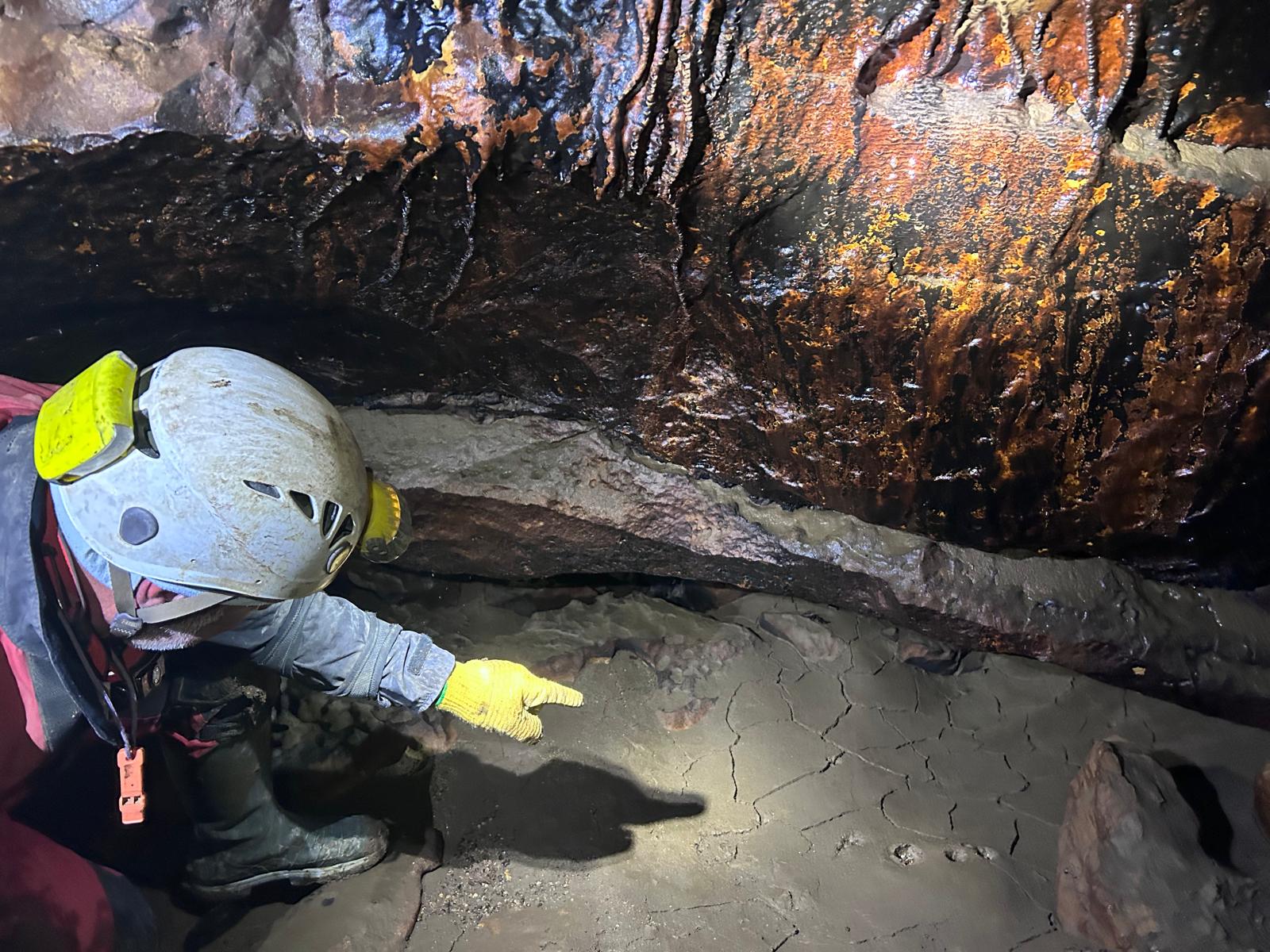
Katie and Jess squeezed onwards to investigate the continuation. This apparently becomes a very flat crawl which ultimately connects into the rest of the Lathkill Dale system. Having established that it was still there, still flat and still requiring considerably more crawling, we collectively decided that could be an adventure for another day.
Sometimes good cave exploration is knowing when to leave something for next time.
We spent a little longer having a look around and taking photographs before beginning the journey back out. Then came the inevitable prusiking — that magical part of a caving trip where gravity, having assisted you so generously on the way in, suddenly demands repayment with interest.
With the nights beginning to draw in, we eventually emerged into a beautiful evening sky. There are few things quite as satisfying as coming out of a cave as daylight is fading, particularly when you know there is a pub waiting.
So it was off to the Bull's Head for a very well-earned pint, where the unanimous verdict was that Garden Path had delivered a fine trip.
Most importantly from the conservation point of view, the formations we observed appeared to be in good condition and the protected areas were being respected. The exceptionally dry conditions also gave us a useful opportunity to photograph and record parts of the cave under unusually low-water conditions, which should provide an interesting comparison when normal rainfall eventually returns.
A note on access
Garden Path is not an open recreational caving site. The entrance is kept locked and access is permitted for scientific purposes under the conditions of DCA's licence from Chatsworth.
This can include legitimate one-off photographic or monitoring visits such as this one, as well as longer-term research and exploration projects.
Cavers with a valid reason for wishing to visit should contact the DCA Access Officer, complete the required access form and provide evidence of current liability insurance. Once permission has been granted, key collection and the designated surface access route will be explained.
Please remember that access arrangements such as these depend upon cavers respecting both the cave and the conditions agreed with the landowner.
A beautiful cave, some fascinating observations, a surprise slow worm, absolutely no water and a pint at the end.
I'd call that a successful evening.